Understanding the difference between inverter and converter, transformer, and the rectifier is required when planning for particular power equipment inputs and outputs. Here we at Powerbank-Online will give you the detail n what is the Difference Between Inverter And Converter.
What are Inverters?
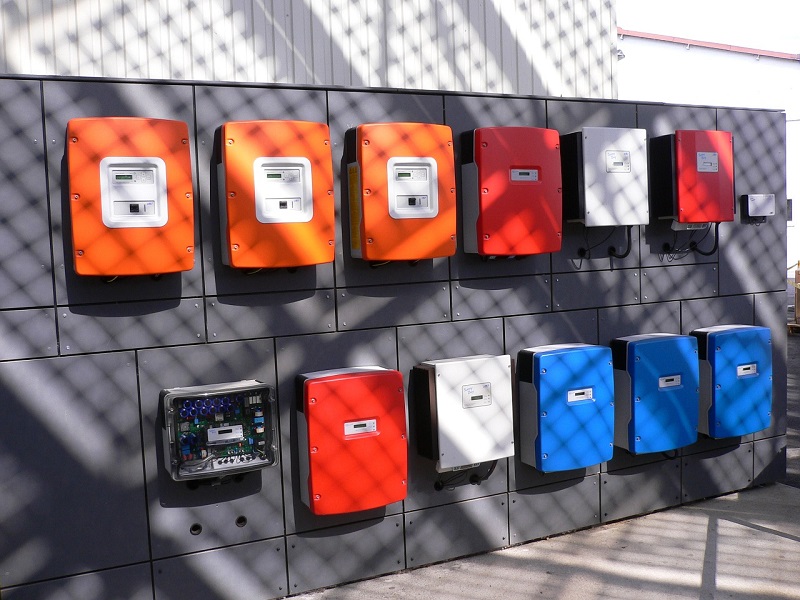
The Inverters are ultimately had just one job – take in DC and turn it into AC. In law, this is extremely simple, because a simplistic switch and some original wiring can provide you with an alternating square wave running at the number that you flip the switch.
But in truth, the square waves are extremely damaging to almost all new electronics that rely on AC power. Therefore the actual question is: How do you use AC power and convert it into something useable? The answer is, you can filter the square wave using specifically chosen inductors and capacitors to build a sine wave, or at least something close to a sine wave.
Oftentimes, inverters will additionally feature a transformer. This is done so that the AC voltage out can be changed from the DC voltage in, depending on the number of coils on the initial and secondary winding.
The Disadvantages of Inverters:
- These are not perfect for inductive AC and motor loads.
- The sensitive electronic machines can be destroyed by poor waveforms by low batteries.
- It should have a reliable source of energy for re-charging.
What are Converters?
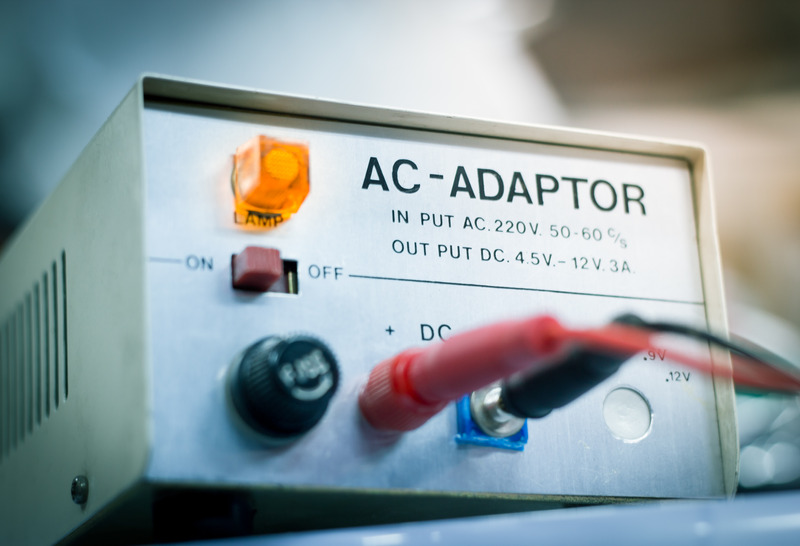
The converters additionally have a unique job: To convert AC power to DC power. But the term “converter” is very general, and you may frequently see it being utilized inaccurately. For instance, if someone tells “DC to AC converter,” that executes logical sense even though the correct terminology is “DC to AC inverter.” The same discussion can be started by saying “DC to DC converters.” AC to DC converters is too usually referred to as power supplies.
The Disadvantages of Converters:
- The Lower current overload capacity.
- The excellent quality Automatic regulators are more costly than Mechanical regulators.
The Main Difference Between Inverter And Converter
- Types
- Applications
- Disadvantages
- References
1. Types
The primary variation between many kinds of converters or inverters is that they differ in their nature and the devices they support.
- The Analog-to-digital converter (ADC) is a machine that transforms the input analogue voltage to a digital number equal to the magnitude of the voltage or current. Some non-electronic or partially electronic devices, like rotary encoders, can be viewed as ADCs.
- The Digital-to-analog converter (DAC) is a device that transforms a digital code to an analogue signal. The DAC is found in CD players, digital music players, and PC sound cards.
- The Digital-to-digital converter (DDC) is a machine that transforms one kind of digital data to a different type of digital data.
There are three varieties of inverters:
- The Square wave inverter: This is a kind of inverter that generates a square wave output. It consists of a DC source, four switches, and the load. The switches can withstand heavy current flow. It is the less valuable inverter but it produces low-quality power.
- The quasi wave or Transformed square wave inverters: As the name implies, the waveform is square, and not sinus as needed to have real sine wave AC. The transformed square wave has a step or dead space within the square waves. This decreases the misuse or harmonics that cause difficulties with electrical devices. It acts for all pure loads like lamps or radiators. It takes less and is more useful than the square wave.
- The True or Pure Sine wave inverters: These are the most costly form of inverters. Most of the AC products run on transformed sine wave inverters since they are relatively less pricey.
2. Utilization
The converters are used to transform AC power to DC power. Practically all electronic devices need converters. They are also applied to detect amplitude modulated radio signals. They are additionally used to supply polarized voltage for welding. The converters can be used for DC to DC conversion. Here, the inverter converts DC to AC, then a transformer is applied to change it back into DC.
The Inverters are applied to convert DC electricity from sources like solar panels, batteries, or fuel cells to AC electricity. Micro-inverters are utilized to convert DC power from solar panels to AC for the electric grid. The UPS or Uninterrupted power service utilizes an inverter to supply AC power when the main power is not accessible. It is further used for induction heating.