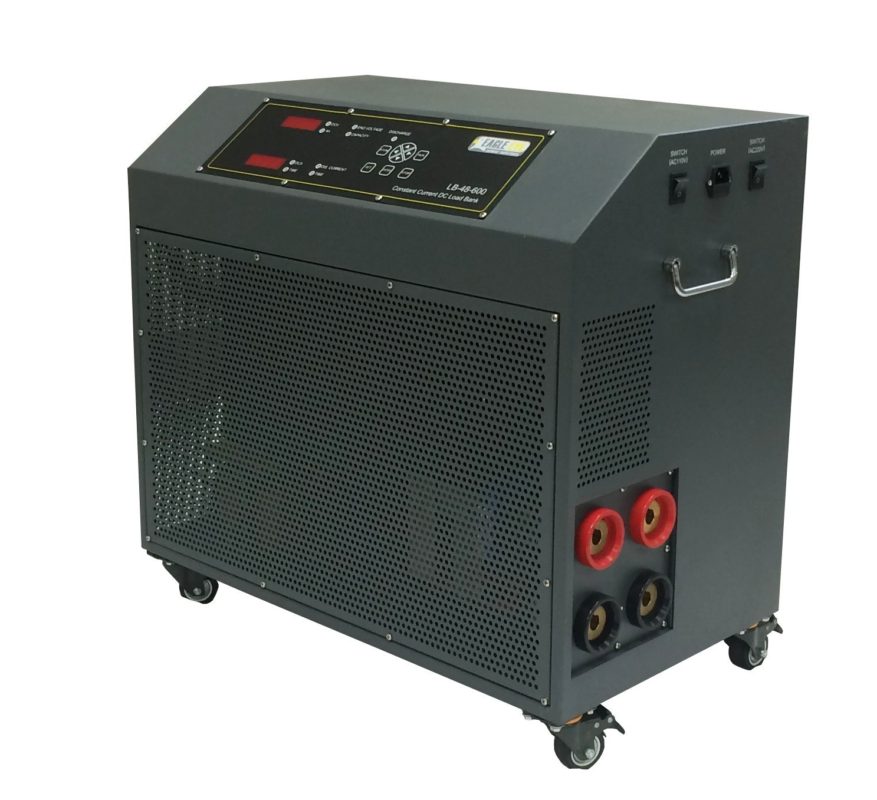
Running your generator productively is the way to guaranteeing its life span and maintaining a strategic distance from pointless personal time. Reserve generators can stay unused for significant lots, anticipating a power cut before easily blocking it. Indeed, even a regular no-load test leaves the reserve generator inclined to flaws caused through underuse or disregard.
These diesel backup generators that run once in a while as well as delicately loaded can develop fuel stores in parts of the motor after some time, which may leave your reserve generator with diminished output capacity when it is required. Arrangements. Things like light loading a generator or dismissing planned maintenance can prompt unforeseen working costs, intemperate wear and expanded outflows
A load test in this circumstance will guarantee that your reserve generator will bolster your load when the event emerges. Yearly load testing is basic to affirm your generator is fit for taking care of the requested load when important, and some insurance agencies request it as a major aspect of their
Above all, however, regularly planned maintenance will ensure that your generator is prepared when it’s called upon. For certain applications, for example, server farms, blood donation centers, and hospitals, crisis power generators just can’t stand to fizzle. That is the reason protection maintenance methods like load bank testing are indispensably significant.
Load bank testing is a compulsory necessity for some backup power age applications. Crisis power age frameworks fall under various administrative oversight conditions and code necessities. The National Fire Protection Agency (NFPA) and the National Electric Code (NEC) have both drafted rules which relate straightforwardly to the load bank testing of crisis generators.
What is the Generator Load Bank Testing?

A GENERATOR LOAD BANK TEST includes an assessment and appraisal of a Genset. It confirms that every primary part of the generator set is in the best possible working condition under loaded conditions. The equipment used to lead a load bank test produces artificial loads on the generator by carrying the engine to a proper working temperature and pressures. This is particularly significant for backup and crisis generator sets that don’t run regularly as well as may not be presented to conveying heavy loads much of the time. The general standard is – if your generator isn’t presented to higher than 30% of its appraised kW load then you ought to consider a load test.
A load bank test guarantees that your generator will run appropriately when it’s required so you can completely rely upon it during a crisis. The way to an appropriate load bank test is that it tests your generator at its full kilowatt (kW) output rating. Since numerous generators don’t regularly work at their full kW rating, you should check your generator can deliver the most elevated conceivable horsepower that might be required – while simultaneously keeping up the satisfactory temperature and weight levels that will enable it to keep running as long as vital.
What are the Different Types of Load Bank Testing Solutions?
Load bank testing solutions incorporate load banks that test the activity of an electrical system. Load banks control the absolute load, power factor, and calendar during the test. A large number of gadgets in an electrical system use sensors that measure current to decide their function. The electrical load should be added during a system test to guarantee all sensors have sufficient current to execute as planned.
There are 3 primary Load Bank Testing Solutions: Resistive, Reactive and Resistive/Reactive:
- Resistive Load Banks – The most well-known sort, resistive load banks mimic the operational load that a power source will see in actual use. They convert electrical vitality to heat utilizing power resistors and disperse the heat utilizing air or water.
Some basic instances of resistive loads produced in your home originate from lights, space heaters, and hot plates.
- Reactive Load Banks – These solutions are utilized to reenact systems influenced by electric engines or other electromagnetic gadgets on a power arrange. Ordinarily, equipment that requires reactive power remuneration is engine driven gadgets, transformers, and capacitors. Reactive Load banks can recreate either an inductive or capacitive load contingent upon the sort of load expected on the power system
- Resistive/Reactive Load Banks – These solutions consolidate both resistive and reactive components in a single load bank package. They may accommodate equipment up to 6250 kW. These load banks can likewise be utilized for incorporated system testing of utility substation protection systems, especially for progressively complex transfers like separation, directional overcurrent, power directional and others.
What is the Purpose of Emergency Generator?
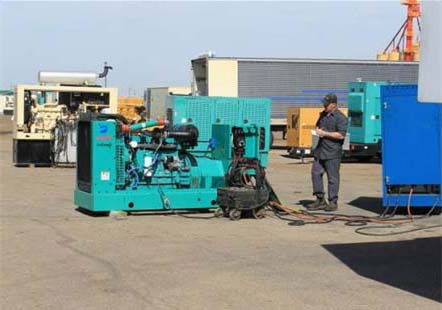
The purpose for an emergency generator set is to give a stable source of power to your facility or commercial activity during an emergency when power from the grid is abruptly lost or isn’t accessible in your condition. In case of a power disappointment, you ought to have peace of mind that your backup power source will kick vigorously on a minute’s notice. In any case, what happens when the power goes out and your Genset does not function true to form? The outcome can frequently be expensive and some of the time catastrophic.
This is correctly the reason generator load bank testing is a fundamental bit of an extensive safeguard generator maintenance plan, which you ought to in a perfect world have led on your Genset(s) each year. Load bank testing guarantees that your generator will be completely trustworthy and operational, just as equipped for the most noteworthy conceivable load it might be required to deal with at any basic point in time.
How does a Load Bank Tester Work?
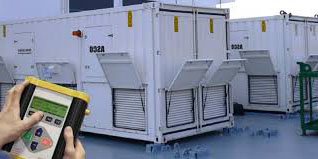
At the point when a load bank test is executed, an artificial load is placed on the generator. The test is planned and step by step expands the kW load in explicit augmentations. Each time the kW load is expanded, the test measures and records basic engine parameters, the generator’s capacity to deal with the lift, and its capacity to keep functioning at the most noteworthy conceivable level for a continued period. The equipment expected to finish the test incorporates a load bank (machine with kW appraised sizes and battery like links).
Placing a 100 percent capacity load on a generator and enabling it to keep running for some time not just uncovers any issues in the generator and the engine and its cooling system; it likewise benefits the engine by appropriately seating the rings and dislodging develop in the burning chambers and on the valves. Diesel engines particularly need an occasional load test to keep up execution and mileage.
At Care-labs we dispatch a versatile load bank to the site, enabling the generator to be load-tested securely in controlled conditions, during an era that suits your business. We test the generator over a scope of loads, checking and assembling information continually for two to four hours, contingent upon your prerequisites.
Stage 1
Check every fluid level in the generator. Ensure the fuel tank is full, the oil level is right, and the radiator or coolant tank is full on the off chance that it is a water-cooled generator.
Stage 2
Start the generator and enable it to reach a typical working temperature. Watch and tune in for any potential issues or irregular clamors. If any issues are noted, don’t continue with the test until you deal with them.
Stage 3
Start interfacing the loads, starting with any huge 220-volt loads and including littler 110-volt loads until each leg conveys 50 percent of the most extreme consistent appraised load of the generator. Try not to surpass 50 percent on any one leg. If conceivable, utilize 220-volt resistive loads, for example, enormous space heaters or water heaters. They improve this progression since they apply the load to each leg similarly.
Stage 4
Check the amperage of each leg with the ammeter, and check the voltage from each leg to impartial with the VOM set to peruse AC volts. For a 110/220 volt single phase generator, the voltage of each leg should fall somewhere in the range of 105 and 125 volts, and the current ought to be half of the evaluated watt output partitioned by the voltage, for each leg. For instance, if the voltage from each leg to impartial is 117 volts loaded, and the generator is evaluated at 10 kilowatts consistent, each leg ought to be loaded to 5000 separated by 117 or around 42 amperes. If one of the two legs dips under 105 volts at full load, the generator has bombed the test and needs fixing.
Stage 5
Screen the generator while keeping up this load for the length of the test. Watch for overheating, tune in for irregular clamors, and screen the output. On the off chance that an issue creates, shut the generator down rapidly to limit harm, and fix the generator before returning it to support. To what extent the test should proceed relies on the kind of generator. Light-obligation compact generators ought not to be kept running at full load for more than three to four hours. Contractor grade generators ought to have the option to keep running for eight hours. Ceaseless obligation air or water-cooled generators should run 24 hours. Bigger modern quality diesel generators ought to in a perfect world be kept running under full load for about seven days.
Stage 6
Expel the loads step by step after the test, and enable the generator to keep running under light load for 60 minutes. Evacuate all loads five to ten minutes before closing the generator down.
The load test results are recorded, explored and answered to our clients for further action. We furnish our clients with a Load Bank Report that contains intensive, thorough test results
Cautions
- By figuring the house load 1st you will not be in risk of wasting power to the house loads in the situation of any normal power crash…the building will already be on its an emergency source.
- Imitate lockout/Tagout methods & use PPE as guided by NFPA 70E & OSHA regulations as located in 29 CFR 1910 Subpart S. Nobody should be shown to the live bus without using the usual levels of PPE.
Benefits of Load Bank Testing
- Checks the Gensets capacities restricted to simply routinely firing it up.
- Issues found early can be fundamentally more affordable and averts future serious issues.
- Stays away from wet-stacking and wipes out carbon stores.
- Confirms the engine cooling systems will perform while under load.
- Guarantees that the Genset should work appropriately when you need it most.
- Tests that a Genset is equipped for working at pinnacle indicated kW output for a predefined measure of time.
- Facilitates the impacts of light loading by consuming off the buildup that prompts wet stacking.